







Field service teams live and die by a handful of numbers. In heavy equipment, each point of performance carries real margin, uptime, and safety consequences. The good news is that the levers are measurable, and improvements compound when applied together across first-time fix, routing, parts, and maintenance strategy.
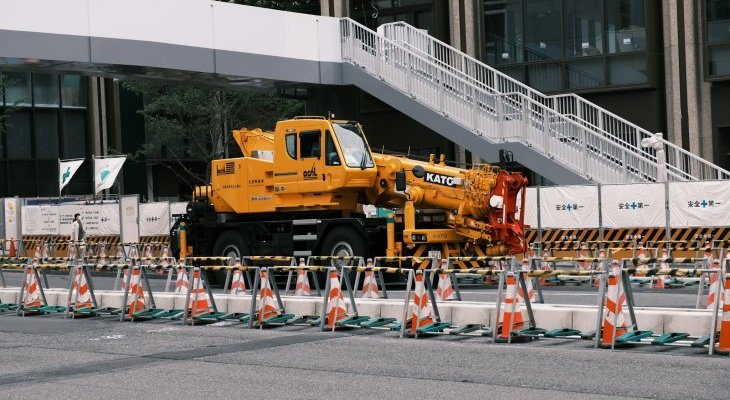 Fot. Yong Lee/unsplash.com

What follows is a practitioner’s view of which metrics matter most, why they matter, and how to hardwire better outcomes into daily operations. No fluff, just the math and the moves that consistently raise service profitability while protecting operators and assets.
The numbers that shape profitability
Profit in field service is the byproduct of a few controllable inputs. Get these right and the P&L improves predictably.
First-time fix rate often hovers near 75%. Moving it to 85% cuts repeat dispatches by 40% because repeat work drops from 25% to 15%. In a 50‑technician team running 3 jobs per tech per day over 220 days, that is about 3,300 truck rolls avoided. At an average direct cost of around 300 dollars per roll, the annualized saving approaches 1 million dollars.
Truck roll cost sits near 300 dollars when you combine labor, fuel, vehicle, and back office processing. That figure excludes the customer’s downtime cost, which can dwarf the service cost on production-critical equipment.
Parts unavailability is a leading cause of failed first-time fixes, responsible for roughly a quarter of repeat visits. Raising on-hand fill rates at the van or forward-stocking level reliably boosts first-time fix without adding headcount.
Inventory carrying cost for spare parts typically lands between 20% and 30% of inventory value per year. Every 100,000 dollars in excess stock ties up 20,000 to 30,000 dollars annually in capital, storage, shrink, and obsolescence. Right-sizing van stock and forward locations frees cash without sacrificing service levels.
Predictive maintenance programs have been shown to reduce unplanned downtime by 30% to 50% and cut maintenance cost by 10% to 40% by timing interventions to actual condition rather than calendar intervals.
Each avoided 30‑mile round trip prevents roughly 12 kilograms of CO2, using 8.89 kilograms of CO2 per gallon of gasoline and a representative fuel economy. Multiply that by thousands of prevented revisits and the environmental and fuel savings become material.
Workplace injuries are financially severe. The average cost of a medically consulted injury is tens of thousands of dollars, and a fatality runs into seven figures in direct and indirect costs. Embedding hazard controls and verification into every job meaningfully reduces exposure.
How to operationalize the improvements
Results follow process. When the workflow removes friction for technicians and planners, the metrics above start moving in the right direction without heroics.
Engineer first-time fix into the workflow
Front-load diagnosis with structured triage questions, fault-code ingestion, and photo or video evidence before scheduling. Match jobs to technicians by skills, certifications, and proximity, not first availability. Auto-generate parts kits from asset BOM and service history so the right spares travel with the technician. If remote assistance can resolve a portion of incidents, triage for that first to avoid the roll. For all of the above, specialized heavy equipment field service software consolidates the steps and removes guesswork.
Build capacity with routing and time capture
Route for time-on-tools, not just distance. Cluster jobs by geography and part commonality to shrink windshield time. Enforce accurate start, travel, and wrap-up capture in the mobile app so planners see real constraints and can remove dead time. The typical outcome is fewer partial days and more fully productive hours without hiring.
Put parts where the failures are
Use install base data and failure frequency to set van stock min-max levels by technician and region. Feed consumption back into forecasting weekly so slow movers exit vans and fast movers stay close to the point of use. Tie work orders to parts reservations to stop last-minute cannibalization. The combined effect is a higher on-hand fill rate and fewer return visits attributed to missing parts.
Predict before it breaks
Instrument critical assets with telemetry, even if only for a subset of parameters. Pair thresholds with service rules so alerts schedule automatically and spares are staged ahead of arrival. Start with components that cause high downtime minutes per incident. Expect fewer catastrophic failures, lower overtime, and more maintenance during normal hours.
Make safety and compliance routine
Bake pre-job risk assessments, lockout verification, and lift plans into the digital workflow so technicians cannot proceed without completing them. Require photo evidence and signatures when tasks demand them. The outcome is fewer recordable incidents and the avoidance of costs that routinely exceed tens of thousands of dollars per case.
Prove the ROI month by month
Publish a simple scorecard: first-time fix, repeat visit rate, average truck roll cost, wrench time, on-hand parts fill rate, and unplanned downtime minutes prevented. Tie each improvement back to cash impact using the cost baselines above. When the team sees the line of sight between process and dollars, adoption accelerates and the gains stick.

Konferencje Inżynieria
WIEDZA. BIZNES. ATRAKCJE
Sprawdź najbliższe wydarzenia